



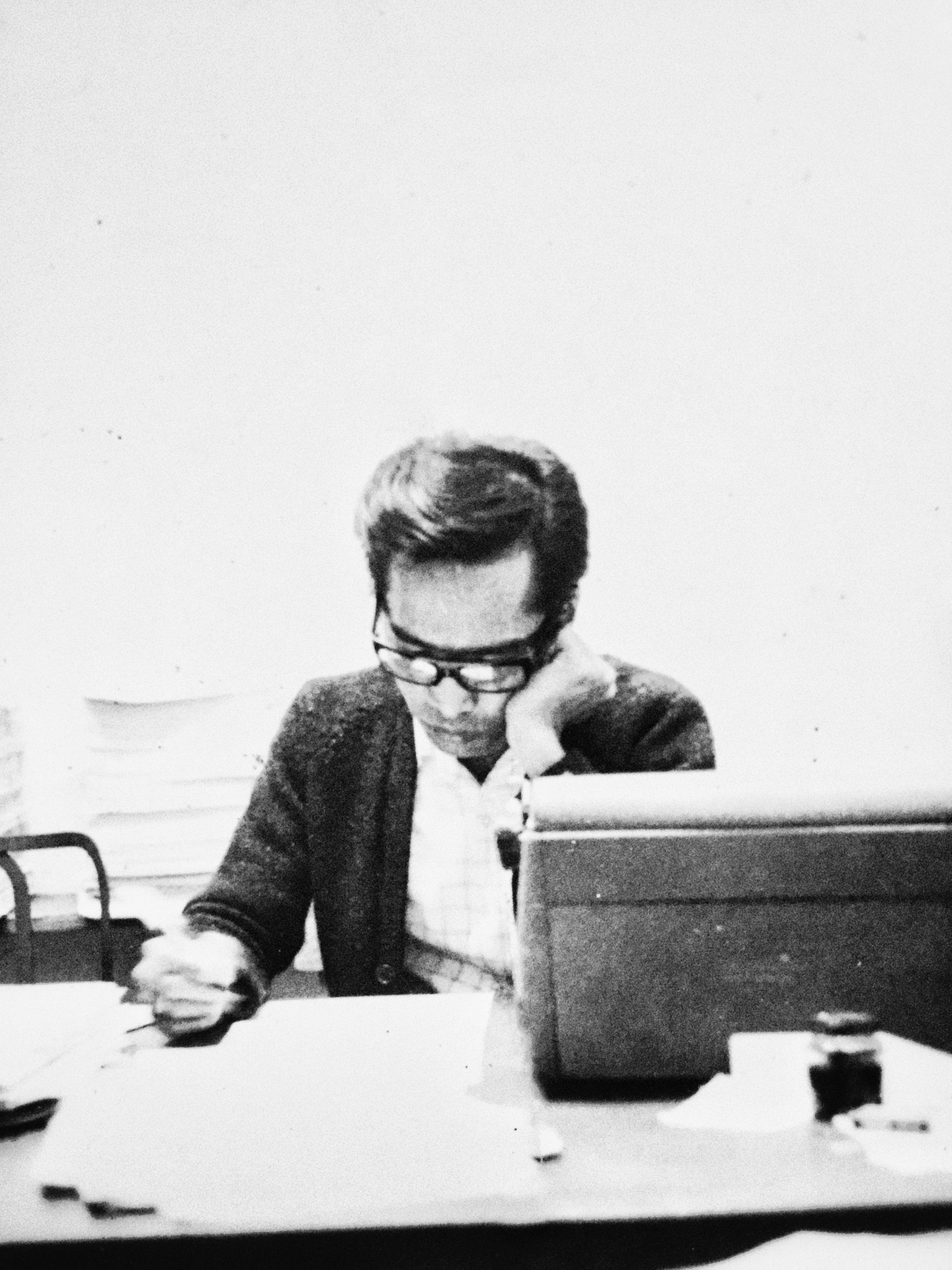
If you were to sit down at my desk right now, you’d see a literal collision of two distinct eras. On one side, I’ve got this towering stack of physical, heavily annotated pages—the meticulous historical research and academic articles written by my father, Dr. Eusebio Tanicala. On the other side is my glowing monitor, waiting for me to take those deep, generational insights, format them, and shoot them out as a digital publication.
Have you ever tried translating a lifetime of dense theological research into something someone can easily digest on their phone? It sounds like just another editorial content gig, right? I can tell you firsthand, it’s not. Taking the hard-earned wisdom of the man I just call “Papa”—a trusted educator, preacher, and mentor who has spent his whole life studying the Word—and prepping it for a modern online audience is actually the continuation of an incredibly sacred, ancient tradition. It’s the very heartbeat of biblical disciple-making.
Because here’s the thing: since the dawn of the early church, the mission has always remained static, even as our tools have evolved.
Think about it. When Jesus stood on that Galilean hillside giving the Great Commission, He didn’t hand out a scroll. He issued a spoken mandate: “Go therefore and make disciples of all nations, baptizing them in the name of the Father and of the Son and of the Holy Spirit, teaching them to observe all that I have commanded you.” (Matthew 28:19-20).
The early apostles took that literally. For them, the spoken word was the immediate, urgent vehicle for the Gospel. They walked those dusty Roman roads, reasoned in synagogues, debated in public squares, and shared meals in crowded homes. The Apostle Paul knew the sheer power of an audible testimony better than anyone. As he wrote, “So faith comes from hearing, and hearing through the word of Christ” (Romans 10:17).
But what happened as the church grew and spread across continents? The spoken word hit its physical limits. An apostle, a disciple, or a teacher could only physically be in one city at a time. So, to make sure new believers weren't being led astray by false doctrines, the apostles pivoted to the most advanced technology of their day: ink and parchment.
When Paul was locked in a Roman prison, completely stripped of his ability to speak to his congregations, he didn't stop communicating. He started writing. His epistles to the Ephesians, the Philippians, and the Colossians weren't just friendly "thinking of you" letters; they were robust, theological training manuals. The written word became a permanent mentor. As Paul reminded Timothy, “All Scripture is breathed out by God and profitable for teaching, for reproof, for correction, and for training in righteousness, that the man of God may be complete, equipped for every good work” (2 Timothy 3:16-17).
Centuries later, I look at what we're doing and see the exact same dynamic playing out. The papyrus has just been replaced by the printing press, and the printing press is being augmented by the internet.
When I sit down to synthesize Papa’s historical research into a structured digital series, I’m engaging directly in Word Ministry. The medium might be a blog, a newsletter, or an online essay, but functionally? It’s simply our modern equivalent of an epistle. It takes the timeless truths of Scripture, pairs them with the wisdom of previous generations, and drops them directly into the hands—and onto the screens—of a world desperate for guidance.
Digital tools allow a single message to cross geographical boundaries the early apostles could have only dreamed of. They allow rigorous, academic study to be repackaged so that a young professional on their morning commute can actually engage with it. It perfectly fulfills that biblical call to “entrust to faithful men, who will be able to teach others also” (2 Timothy 2:2).
But I also know that the educational power of the digital word is only half the equation. Discipleship is ultimately about life transformation. Information has to lead to imitation. Paul knew that words on a page were meant to produce a specific kind of life, which is why he urged his readers: “Brothers, join in imitating me, and keep your eyes on those who walk according to the example you have in us” (Philippians 3:17).
That is where the digital and the physical have to meet. A digital publication can instruct, correct, and inspire all day long, but it is only truly powerful when it drives the reader back into their local ekklesia—their church and community. It has to equip them to love their family, serve their neighbors, and lead well in their workplace.
So, as I make those final edits and publish Papa’s essay to the web, the whole narrative just comes full circle for me. The ink of the first century, the typewriters of the twentieth century, and the digital platforms of today are all just vessels. At Word Ministry, we’re simply joining a massive host of analog and digital content creators in spreading the Word and making disciples. It’s an unbroken chain, and we're just making sure the truth of Scripture is never lost in translation.