



Ministry Strategy Critique asks whether the methods are truly serving the mission—or inadvertently working against it.
Why a booming postwar church planting movement suddenly flatlined—and the radical 1975 plan four missionaries published to dismantle their own funding structures.
For two decades following the end of World War II, American Churches of Christ experienced an extraordinary era of expansion across the Philippine Islands. Fuelled by postwar optimism, evangelistic zeal, and an abundance of American financial resources, new congregations multiplied rapidly.
Yet by the late 1960s and early 1970s, this once-dynamic movement had hit a wall. Growth flatlined, and many local churches seemed incapable of standing on their own feet.
The crisis forced an uncomfortable question: Why had a movement blessed with so much external funding suddenly stalled?
On January 27, 1975, four mainline American missionaries—Ray Bryan, Don Huddleston, Robert Buchanan, and Doug LeCroy—offered a startling answer in an open letter titled “Proposed Plan for Philippine Self-Support”. Their diagnosis cut against the grain of traditional missionary fundraising: American money was choking the Philippine church.
Far from accelerating the Gospel, foreign financial subsidies had created a paternalistic trap that stunted local congregational maturity, stifled stewardship, and delayed true indigenous autonomy.
The Economics of Dependency and the “Learn to Earn” Alternative
The core of the missionaries’ diagnosis was that long-term subsidies had fundamentally altered the relationship between local Filipino congregations and their ministers. Because a preacher’s salary arrived via check from across the Pacific, church members felt little financial responsibility toward their own leadership. This dynamic bred a passive church culture where local Christians expected American donors to “foot the bill” for evangelism and pulpit ministry.
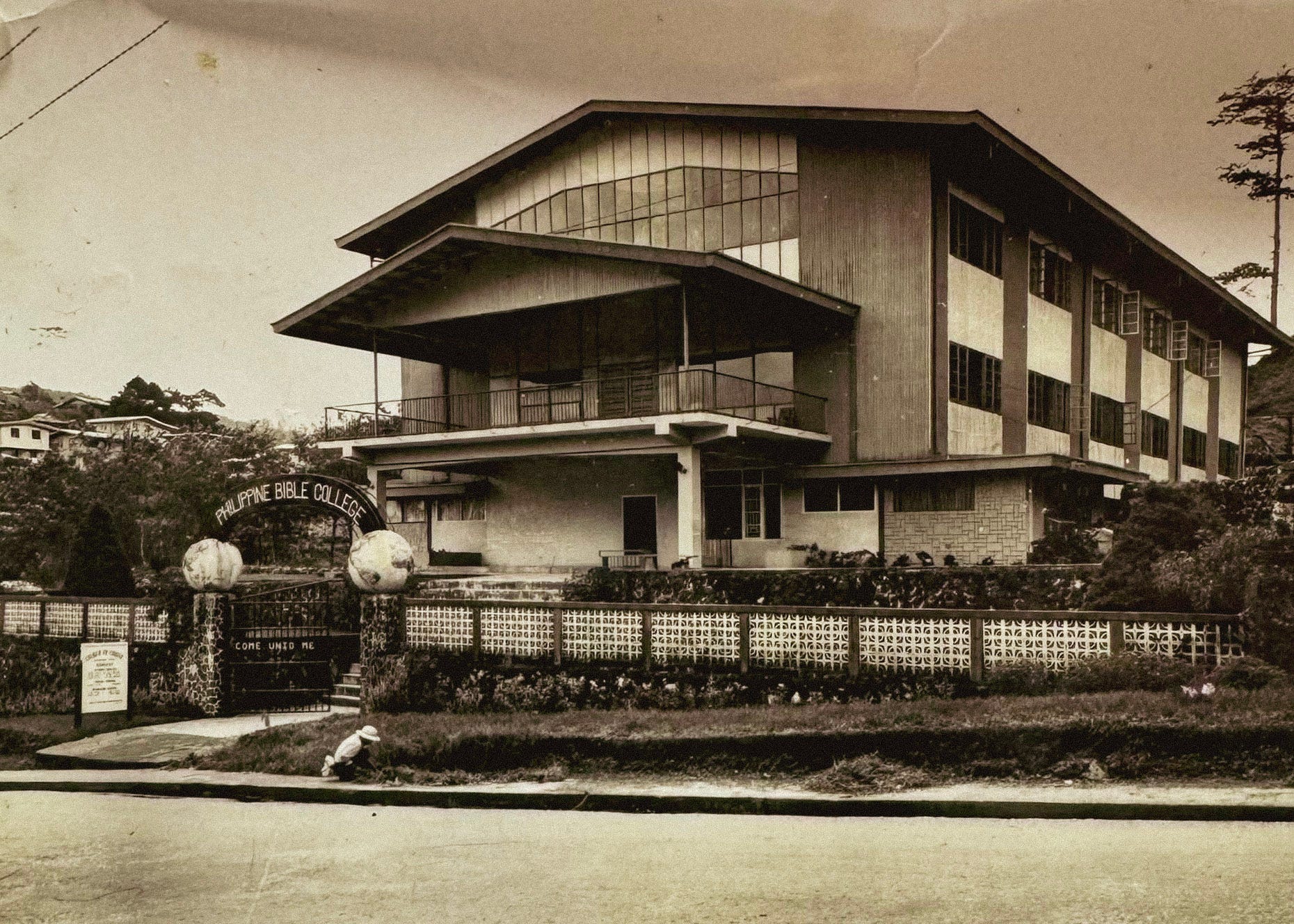
This realization did not emerge in a vacuum. It echoed warnings raised years earlier by William Douglass Gunselman, director of the Philippine Bible College of Quezon City. Gunselman had argued that importing the American model of the fully salaried, professional pulpit minister was economically unrealistic in a developing nation. Instead, Gunselman advocated for a “learn to earn” model—equipping local preachers with vocational and professional education so they could support themselves in the marketplace rather than relying on foreign subsidies.
       [ Foreign Subsidy Model ]                 [ Gunselman's "Learn to Earn" Model ]
  U.S. Donors ───> Preacher's Salary              Preacher's Trade/Profession ───> Self-Support
                        │                                      │
                        ▼                                      ▼
             Passive Congregation                      Autonomous Congregation
         (Low giving, high dependency)            (Local ownership, sustainable growth)
The 1975 Proposal: Anatomy of a Course Correction
Recognizing that the status quo was unsustainable, Bryan, Huddleston, Buchanan, and LeCroy publicly admitted fault in the American funding model and recommended two decisive actions:
Complete Termination of U.S. Financial Support for Local Preachers
The authors declared that ongoing American subsidies were actively harming the indigenous church. In their open letter, they wrote:
“It is our conviction, after much personal meditation and discussion, after listening to preachers here, and much observation, that termination of support from America for local preachers, is a necessity.”
2. A Structured Three-Year Phase-Out Plan
Understanding that an abrupt cutoff would strand working evangelists and create economic panic, the missionaries designed a measured, three-year transition. They called on all American churches, sponsoring congregations, and individual donors to systematically scale down and eliminate financial subsidies for Filipino preachers, forcing local congregations to transition toward self-support.
To ensure widespread accountability, the missionaries published their open letter in major Restoration Movement periodicals of the era, appearing in Philippine Mission News (March 1975, Vol. 18, No. 2) and Firm Foundation (April 1, 1975, Vol. 92, No. 13).
The Theological Battlefield and Historical Irony
The publication of the 1975 proposal immediately ignited controversy across the mission field, particularly from the noninstitutional (”anti”) Churches of Christ.
Filipino noninstitutional leaders, most notably Romulo B. Agduma, pushed back forcefully against the missionaries’ conclusions. Agduma argued that the mainline churches were stagnating not simply because of American dollars, but because of unscriptural “sponsoring church” organizations and human institutions. To Agduma, the mainline missionaries were scapegoating money to avoid confronting what he viewed as structural and ecclesiological errors.
Yet history soon revealed a striking irony:
Year : 1975
Group Evaluators / Leaders: Mainline Churches of Christ/ Ray Bryan, Don Huddleston, Robert Buchanan, Doug LeCroy
Primary Finding : Paternalistic U.S. subsidies were stunting local church growth and stewardship.
Recommended Solution : 3-Year Phase-Out Plan to terminate U.S. preacher support.
1980 : Noninstitutional (”Anti”) Churches of Christ
Group Evaluators / Leaders: Ed Harrell, Tommy Poarch
Primary Finding : Identical dependency dynamics were paralyzing noninstitutional congregations.
Recommended Solution : 3-Year Phase-Out Plan to terminate U.S. preacher support.
Within five years of Agduma’s critique, American noninstitutional leaders—including Ed Harrell and Tommy Poarch—conducted their own evaluation of noninstitutional mission work in the Philippines. By 1980, Harrell and Poarch observed the exact same dependency trap within their own ranks. Despite their theological differences with mainline missionaries, their proposed solution was identical: a three-year phase-out plan to curb U.S. financial dependency and rescue local church autonomy.
Conclusion: The Measure of True Autonomy
The 1975 “Proposed Plan for Philippine Self-Support” stands as a landmark moment of institutional self-critique in mission history. It demonstrated that money, no matter how generously given, cannot substitute for local ownership.
A truly indigenous church must be able to self-govern, self-propagate, and self-support within its own economic reality. By having the candor to dismantle the very financial structures they had built, the missionaries of 1975 left behind a timeless reminder: the Gospel thrives best when local communities bear the weight—and the joy—of their own ministry.
Key Missiological & Strategic Insights
1. The Paradox of Subsidy (Capital vs. Capacity)
The Insight: Financial subsidy is often inversely proportional to local congregational capacity.
The Application: When external donors fund core operational expenses—such as a pastor’s salary—it removes the necessity for local sacrificial giving. Over time, this atrophy of local stewardship transforms churches into perpetual beneficiaries rather than active contributors.
2. The Necessity of Bi-Vocational Ministry (”Learn to Earn”)
The Insight: Exporting professionalized, full-time ministerial models to developing economies creates structural fragility.
The Application: William Douglass Gunselman’s “learn to earn” framework highlights the value of bi-vocational and marketplace ministry. Equipping leaders with secular trades or professions ensures that church planting can expand as fast as the Gospel spreads, rather than only as fast as foreign budgets allow.
3. The Irony of Theological Compartmentalization
The Insight: Structural and economic realities transcend theological divides.
The Application: Both mainline and noninstitutional Churches of Christ—despite fierce debates over ecclesiology and institutionalism—fell into the exact same financial dependency trap and arrived at the exact same operational solution. Cross-cultural workers must recognize that poor economic methodology will undermine a mission regardless of how sound its theological doctrine may be.
4. The Architecture of Healthy Phase-Outs
The Insight: Course corrections require a balance of radical clarity and pastoral patience.
The Application: The missionaries did not advocate for an immediate, punitive cutoff of funds, which would have devastated families and damaged relationships. Instead, they paired a clear, non-negotiable end goal (complete termination of subsidy) with a realistic, structured timeline (three years), allowing local ecosystems time to adapt and assume responsibility.
Source : Cox, Brady Kal, "Postwar Churches of Christ Mission Work: The Philippines as a Case Study" (2018). Digital Commons @ ACU, Electronic Theses and Dissertations. Paper 78. https://digitalcommons.acu.edu/etd/78
